Choosing materials for a bespoke wardrobe is one of the most enjoyable parts of the design process — and one of the most consequential. The timber, paint, and hardware you select will define how the wardrobe looks on day one and how it ages over the years ahead.
This guide covers the main options we discuss with clients across Hertfordshire, from painted cabinetry in period bedrooms to solid oak walk-in wardrobes.
Carcass materials
The carcass is the structural body of the wardrobe — the panels that form shelves, sides, and backs. Common choices include:
MDF (Medium-Density Fibreboard) — Smooth, stable, and ideal for painted finishes. MDF does not warp easily and accepts paint beautifully. It is the standard choice for painted bespoke wardrobes.
MFC (Melamine-Faced Chipboard) — A cost-effective option with a durable melamine surface. Often used for internal carcasses where only the doors are visible. Less suitable for exposed edges.
Plywood — Stronger than MDF, with visible edge grain if left exposed. Popular for contemporary designs and internal drawer boxes. Birch plywood is a premium choice.
Solid timber — Used for visible elements, drawer boxes, and traditional joinery. Oak, walnut, and ash are common. Solid timber moves with humidity, so it is typically reserved for doors, frames, and feature panels rather than entire carcasses.
For most bespoke wardrobes, a combination works best — MDF or plywood carcasses with solid timber or veneered doors.
Door finishes
Painted cabinetry
Painted wardrobes are the most versatile option for Hertfordshire homes. Farrow & Ball, Little Greene, and similar heritage paints in muted neutrals — off-whites, greiges, soft greens — complement period and contemporary bedrooms alike.
Painted finishes can be refreshed if you redecorate, which is a practical advantage in family homes. Specify a durable, wipeable paint system suitable for furniture rather than walls.
Natural timber
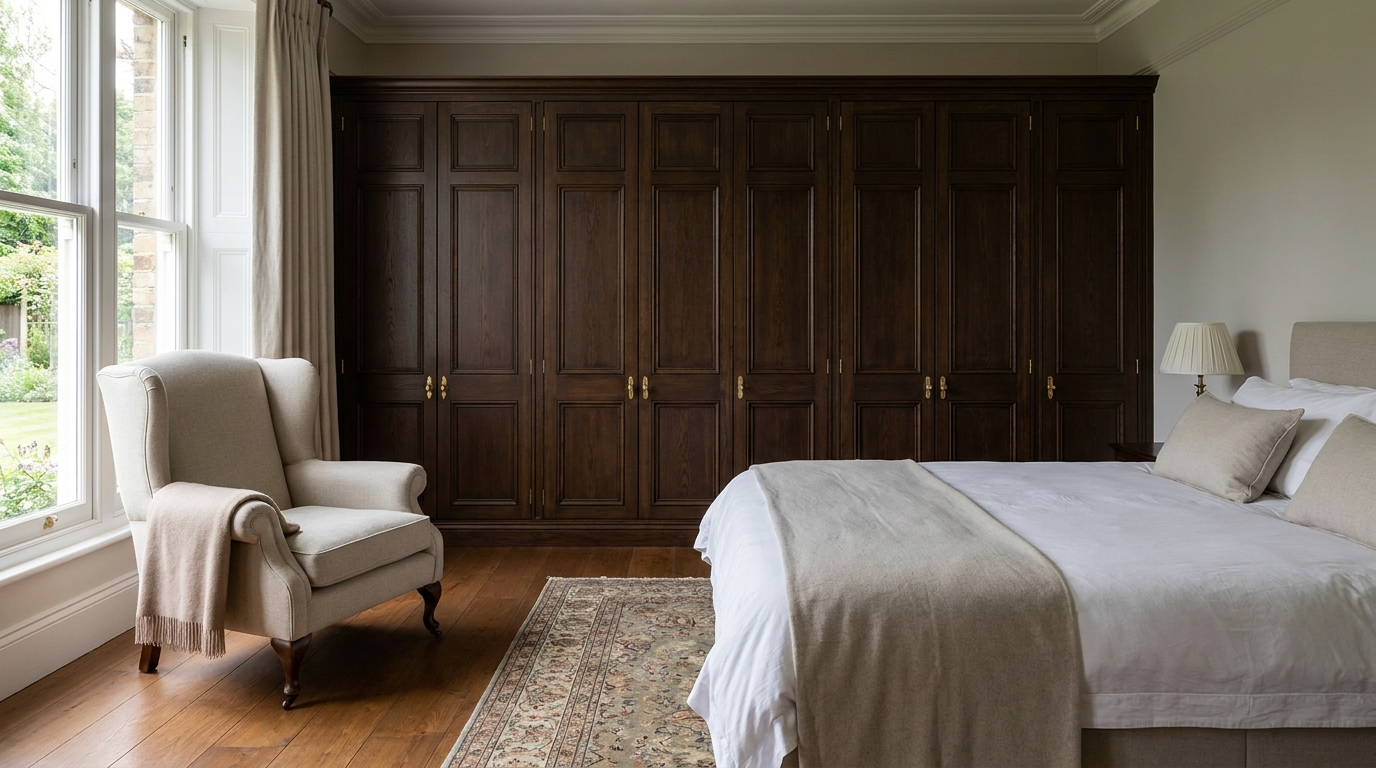
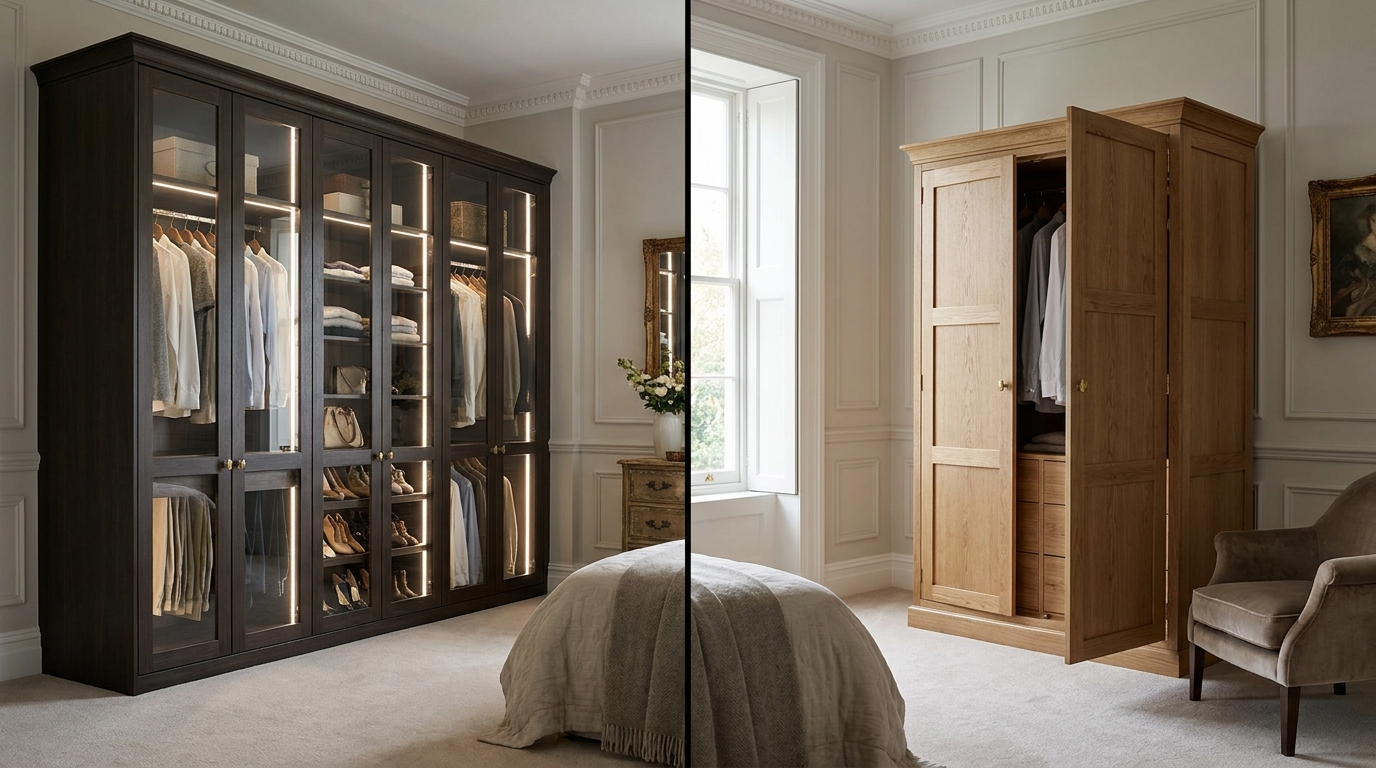
Oak remains the most popular timber for bespoke wardrobes. It is hard-wearing, develops a rich patina, and suits both traditional and modern interiors. Walnut offers a darker, more luxurious tone. Ash is paler and works well in Scandinavian-influenced schemes.
Timber can be presented as:
- Solid timber — premium, repairable, ages beautifully
- Veneer — a thin layer of timber over a stable substrate; cost-effective and consistent in grain
- Oiled or lacquered — oil penetrates and protects; lacquer provides a harder surface
Handleless and integrated designs
Handleless wardrobes use push-to-open mechanisms or recessed finger pulls. The result is clean and contemporary. J-pull profiles on the top or side edge of doors are a popular compromise — minimal visual interruption with easy operation.
Internal fitments
Internal materials matter as much as external finishes. Drawer boxes in solid oak or birch plywood with dovetail joints will outlast melamine alternatives. Hanging rails in chrome, brass, or matt black should match your hardware scheme.
Shelves for folded clothing benefit from a slightly textured surface or a thin lip to prevent items sliding. Shoe shelves are often angled or fitted with non-slip inserts.
Hardware
Hardware is the jewellery of a wardrobe. Choices include:
- Hinges — soft-close is standard on quality bespoke work; concealed hinges keep lines clean
- Drawer runners — full-extension, soft-close runners allow access to the back of deep drawers
- Handles and knobs — brushed brass, satin nickel, matt black, or leather pulls
- Sliding door tracks — top-hung systems are smoother and easier to maintain than bottom-track alternatives
Consistency matters. If you choose brushed brass handles, consider brass hanging rails and hinge accents for a cohesive result.
Lighting and mirrors
Integrated LED strip lighting is typically housed in aluminium channels with diffusers. Warm white (2700K–3000K) suits most bedrooms. Cooler temperatures can feel clinical.
Mirrored doors reflect light and make rooms feel larger — particularly valuable in compact Hertfordshire bedrooms. Mirrored sliding doors are a popular choice where floor space is limited.
Choosing for your home
Period properties often suit painted cabinetry or oak with traditional handles. Contemporary homes may favour handleless designs in matt painted finishes or walnut veneers. Loft conversions and awkward spaces benefit from lighter finishes that keep the room feeling open.
We guide clients through material samples during the design phase — seeing timber and paint in your own bedroom light is invaluable. Our bespoke storage cabinetry service covers everything from single alcove wardrobes to full room fit-outs.
For context on how materials affect project cost, see our bespoke wardrobe cost guide. If you are comparing construction approaches, our fitted vs built-in wardrobes guide explains the differences.
We work across Hertfordshire, including Hitchin, St Albans, and Hertford.
Book a design consultation
Material choices are best made with samples in hand and a designer who understands how each option performs in practice.
Book a design consultation and we will bring samples to discuss finishes that suit your home and your budget.